This blog post came from a series of posts I made a few years ago on my Facebook group, Classic Camp's Classic Horror Emporium. Being February is African American history month, I thought it would be a good time to honor some of the pioneers in the history of horror movies. I understand there are not a lot of Black people in Classic horror cinema, but in some ways, that makes honoring those who did appear that much more important.
Duane Jones, the star of Night of the Living Dead, was one of the first Black people to star in a role that did that did not specifically call for a Black actor. In fact, he was a last minute replacement for a white actor who left the role. All the racist subtext with his interactions with the character Harry Cooper was entirely unintentional.
But Duane Jones was more than just an actor. He was also an English professor at New York State University, where he also directed plays at their Maguire Theater on Old Westbury campus. Although he is best remembered for his starring role in the previously mentioned George A. Romero Classic, he appeared in other horror films such as Ganja & Hess, Vampires, To Die For, and Fright House, with none other than Grandpa Munster himself, Al Lewis. Jones suffered an untimely death due to heart failure at the age of 51.
No movie or role is more iconic, in my opinion, than William Marshall in Blacula. Don't let that silly title or obvious blaxsploitation era film fool you, this is actually a really good film by any measuring stick, and mostly because of Marshall's iconic performance. It would redefine jump scares for the next 20 years.
This led him to a sequel, Scream, Bacula, Scream, and several other horror roles throughout his career. His deep, booming voice made him a great choice. One of my favorites was when he played The Grim Reaper in an episode of Benson, when Benson has a near death experience. Fans may also recognize Marshall as The King of Cartoons on Pee Wee's Playhouse.

Next up in famous African Americans in Classic horror films is Mantan Moreland! He was a comedian best known for his bug-eyed reactions to anything scary happening on screen. Yes, I am aware that this is a reaction that is outdated and perhaps even offensive today, but he also would have the best funny lines and his delivery was legitimately funny. His most famous role was the recurring part of playing Charlie Chan's driver, Birmingham Brown, but he also had parts in two zombie comedies, Revenge of the Zombies and King of the Zombies, as well as appearing in A-Hanting We Will Go with Laurel and Hardy, and in the serious horror film, Spider Baby in the 1960s.
It is also interesting to note that his comedy at least cracked barriers if it did not break them. He was almost chosen to replace Shemp in the Three Stooges after Shemp passed away, but they decided to go with Joe Besser instead. While I loved Besser in The Abbott & Costello Show, I think most will agree he never really fit in with the Stooges. Would Moreland have done any better? I have a hard time thinking he could have done any worse, but only our imaginations can answer that for sure.

The next Black History Month Classic horror figure is Ernest Morrison (sometimes known as "Sunshine" Ernest Morrison), who is probably best remembered for his part as Scruno in many of the East Side Kids comedies. This includes two horror comedies, Spooks Run Wild and Ghosts on the Loose, both featuring Bela Lugosi. The group most prominently featured Leo Gorcey and Hunts Hall and changed names several times during their very long run. Although Morrison only appeared in the East Side Kids version of the gang, they also went by the names Dead End Kids, Little Tough Guys, and the Bowery Boys. However, Morrison also appeared without the gang in a serious horror movie, The Ape Man, also featuring Bela Lugosi.
Morrison began his career as a child actor in the early silent version of the Our Gang comedies. He also appeared in a number of other silent comedies alongside such early comedy giants as Harold Lloyd and Snub Pollard. His child roles go all the way back to 1916 when he was only 4 years old, so it could certainly be argued he did break racial barriers.
The next African American history month honoree in Classic horror cinema is none other than the legendary Pam Grier. Although Grier is best known for roles in Blaxsploitation action flicks such as Coffy and Foxy Brown, she also had prominent roles in the previously mentioned Scream, Blacula, Scream, as well as the Ray Bradbury adaptation Something Wicked This Way Comes, as well as The Twilight People, an episode of Monsters, and a personal favorite, Mars Attacks.
One thing to admire about her roles is that she's no scream queen, but a real badass! As Grier once said and is printed in my copy of the book Fast and Furious: The Story of American International Pictures, "I took the parts no other Hollywood actress would because they didn't want to be demeaned or mess up their nails. If I held out for those sweet, pretty, demure roles I'd still be waiting."
Some may resent AIP's jump into the Blaxsploitation market, but when AIP was confronted by the Coalition Against Blaxsploitation, vice president Richard Zimbert noted the money his company threw at Black businesses. "We've got Black publicists. We've got Black people all around the country. We advertise in Black media. Blacula had an all Black cast, a Black director."

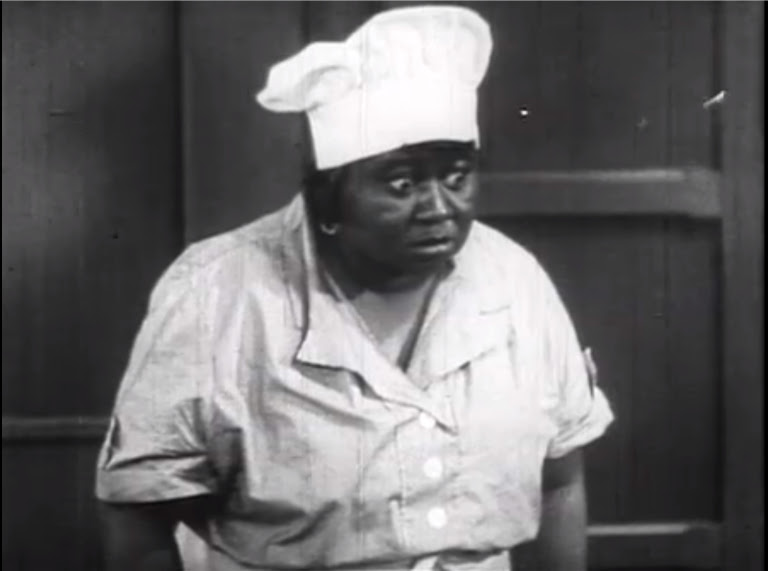
The next Black History Month honoree in Classic horror film is the first African American to ever win any Oscar, Hattie McDaniel. Forgive me if this one is a little bit of a stretch, but if finding Black people in Classic films is difficult, and finding Black people in Classic horror films is even harder, finding Black women in Classic horror films is nearly impossible. But McDaniel was a phenomenal entertainer in American history, who was rarely able to display her full potential. Although she was usually relegated to the typical roles available to Black actors during her era, which were most often maids, butlers, and other servants, she was often able to provide a little extra depth to those characters that few of her contemporaries were capable of. Her abilities to achieve this are best exemplified in the film that won her the Academy Award for best supporting role in Gone With the Wind, and it would be about 25 years before another African American would win another Oscar (Sidney Poitier for best actor in Lillies in the Field in 1964 if you're wondering). McDaniel also appeared in a number of all Black cast musicals where she could really display her talents for not only acting, but also singing and dancing.
So what was her contribution to Classic horror cinema? She appeared alongside Bela Lugosi (who's name keeps coming up in this series) in Murder by Television (which is technically more of a mystery / thriller) in 1935. The photo above is a screenshot of Hattie McDaniel in that film where she plays a cook.

The next Black History Month honoree is an unsung hero of the legendary 1933 King Kong, Noble Johnson! He earned billing for his role as the witch doctor in that Classic film, and he even returned to appear in the sequel, Son of Kong, but his Classic horror movie appearances don't stop there. He also returned to Skull Island (well actually, he returned to the Skull Island movie sets, complete with the giant log) for another personal favorite, The Most Dangerous Game as well as its remake A Game of Death, and he had notable appearances alongside Boris Karloff in The Mummy and Murders in the Rue Morgue with Bela Lugosi. Finally he also appeared in the comedy / horrors The Ghost Breakers with Bob Hope, and Mummy's Boys with the comedy team Wheeler & Woolsey.
But Noble Johnson's career goes further than just playing natives. He was a pioneer of what today are termed "race films," movies specifically for Black audiences with all Black casts played at Black theaters in Black neighborhoods from the 1920s to the 1950s.
In a strange case of synchronicity, Noble Johnson was childhood friends with horror legend Lon Chaney (Sr.), and they even rekindled their friendship in Hollywood, even though they never made a film together. Johnson lived a very long life. Although he stopped making movies in 1950, he lived well into his 90s and died in 1978.

Speaking of King Kong, the next Black History Month honoree is notably from the 1976 King Kong remake, Julius Harris. Although I like to remember him for his portrayal of Boan in Kong, the only survivor of the famous giant log scene, I chose a photo of him as Tee Hee a bond villain from the Live and Let Die, because he's probably more recognizable from that film. Yet, his horror credits go beyond these two roles. He had a major role in Shrunken Heads alongside Meg Foster, and had smaller roles in Grave Secrets: The Legacy of Hilltop Drive, and Darkman. He also appeared in episodes of the genre television shows Friday the 13th, the Series, The Incredible Hulk, Amazing Stories, and Eerie, Indiana. Additionally, he appeared in several mystery television shows including the Hardy Boys / Nancy Drew Mysteries, Murder, She Wrote, Hart to Hart, Kojak, Jake and the Fat Man, and Dragnet (1990).
According to the IMDb, he began his acting career on a dare. He was working as a bouncer in a New York night club where many actors used to go, and he was challenged to try out for a part in Nothing But a Man, and he got it! He then appeared in quite a few Blaxsploitation films, including Super Fly, Shaft's Big Score, The Godfather of Harlem, and Hell Up in Harlem. He continued taking parts well into the 1990s and passed away in 2004.

Another Black History Month honoree is most famous in Classic horror cinema for his role of Hallorann in The Shining, Scatman Crothers! The Scatman had a unique look and voice that made him instantly recognizable in anything he appeared in. A few other genre films he appeared in include the hagsploitation flick Lady in a Cage starring Olivia de Havilland , Twilight Zone: The Movie, Deadly Eyes, and if I can count it as horror One Flew Over the Cuckoo's Nest (well, it's at least horror adjacent, anyway). He also had early genre television appearances in Alfred Hitchcock Presents and Climax! as well as Kolchak the Night Stalker, Bewitched, and voice work in The New Scooby Doo Movies and Scooby Doo and Scrappy Doo. He actually did a lot of voice work in animation and he is often remembered as the voice of Hong Kong Phooey. But he is probably most famous for his part as Meadowlark Lemon in the Harlem Globetrotters.
Scatman's real name was Benjamin Sherman Crothers, and he was born in Terre Haute, Indiana. He was also a songwriter, singer, and musician, making him a full entertainer. And here's a bit of trivia; he was born the year Halley's Comet came to Earth (1910) and died the year it returned (1986), a recognition he shares with Mark Twain, but with different appearances of Halley's Comet.
Another Black History Month honoree in Classic horror cinema is a little more modern - Tony Todd. Best known as the title character in the Candyman film series, Todd also had a real breakout when he played Ben in the Night of the Living Dead 1990 remake, but his notable horror credits don't even end there! He also appeared in Vampire in Vegas, Hatchet, Dead of Night, and a 2006 version of The Strange Case of Dr. Jekyll and Mr. Hyde where he plays the title role. And just how far have we advanced in racial relations when when a Black actor can play that title role?
But wait, there's more! Todd also had appearances in numerous horror television shows, including a late 80s television series of Werewolf, X-Files, Master's of Horror, and he even did voice work for What's New Scooby Doo where he voiced a gargoyle. Then there's the work he did in science fiction and fantasy series, such as several variations of the Star Trek television series, Hercules, and Xena, Warrior Princess, and we finally have someone who can rival some of the Classic genre actors.
Additionally, he did a lot of work on the stage as well, including playing Othello, and that can be great training. Just one more notable horror credit would be in 2016 when he played in an audio drama version of Dracula, again as the title character. Todd has since passed away, but he was taking parts in horror movies and other genres up to the very end.

For the last few Black History Month honorees in Classic horror cinema, I thought I would honor at least a few people behind the camera, starting with a true pioneer in Black cinema, Oscar Micheaux. Long before the Blaxsploitation craze of the 1970s introduced the world to characters like Shaft, Super Fly, and Foxy Brown, and actors like Fred "The Hammer" Williamson, Jim Brown, and Jim Kelly, there was writer, producer, and director Oscar Micheaux, making films for primarily Black audiences who attended Black theaters in Black neighborhoods as far back as the 1920s and 30s. These were pretty far off Hollywood films with pitifully low budgets, but they often took on Black issues of the day like the KKK and being falsely accused of murdering white women.
Micheaux started out as a writer in South Dakota, writing novels and selling them to his white neighbors door to door. Eventually, he decided to make films of some of these stories and things bloomed from there. He made a total of around 40 movies, but sadly, many of these are lost to the sands of time.
At least a few of them can be categorized as horror films! One whose description particularly caught my eye was A Son of Satan, where a man is challenged to stay the night in a haunted house. Although lost, The Conjure Woman is also bound to have supernatural elements. A few other titles that are eye catching to a Classic horror film fan include The Devil's Disciple, Black Magic, and Phantom of Kenwood.
Although his films are termed "race films" today, any study in film history (including horror film history) should include some notation about Oscar Micheaux.
My last Black History Month honoree in Classic horror cinema I am honoring the director of Blacula, William Crain. Throughout this series I talked a bit about blaxsploitation films of the 1970s and race films of the 1920s and 30s, but it should be noted that although these films gave work to Black actors and were pioneers in creating movies specifically for Black audiences, more often that not, the people behind the cameras, directors, producers, etc., in both cases, were white. People like Oscar Micheaux and William Crain were actually anomalies even in these genres.
Crain only has 10 directing credits to his name on the IMDb, but two of them are horror movies, the aforementioned Blacula, and The Watts Monster, which is also known as Dr. Black and Mr. Hyde. A few other non-horror directing credits under his name include episodes of several famous television shows, including The Duke of Hazzard, Mod Squad, Starsky and Hutch, and Designing Women. Another notable credit is that he was assistant director of the film Brother John starring Sidney Poitier.
There was an excellent interview with William Crain on the Without Your Head podcast, which can be found here.
I hope you enjoyed my look at Black contributors to Classic horror films, and if there is anyone you feel I may have overlooked, please feel free to note them in the comments.




.jpg)


